Doomsday Predictions. Panic Is Often More Dangerous Than The Threat.

False Alarms And The Power Of Fear
Most of us are familiar with the famous children’s story of Chicken Little. One day while in the barnyard, Little is struck on the head with an acorn and immediately decides the sky is falling and tells everyone of the impending disaster.
Before long, the entire farm is in an uproar as they all panic because an acorn fell from a tree.
While an amusing tale, it’s an example of art imitating life, with disturbing accuracy.
A Century Of Falling Skies
In 1951, President Harry S. Truman established The International Materials Policy Commission. Its intent was to study the position of American resources. There was a fear of the Cold War military using up a disproportionate amount of minerals and materials.
The Chairman, William S. Paley painted a grim picture of the future and the report predicted the American standard of living would be threatened as well as National security and perhaps the demise of capitalism itself.
In 1953, the Bulletin of The Atomic Scientists moved the Doomsday Clock to two minutes before midnight. The group studied nuclear threats and the clock was a predictor of global catastrophe.
We’re on the edge now.
In 1968 Paul Ehrlich wrote a book The Population Bomb. In the book he predicted that by the 1970s and 1980s, resources would be so depleted there would be mass starvation and the death toll would be in the hundreds of millions. His fame grew by many appearances on The Tonight Show with Johnny Carson.
Al Gore and Global Warming advocates warned of coastal cities being submerged by melting ice caps. In twelve years, no one would recognize the world we live in. That was in the 1990s.
Oddly enough, many of the climate alarmists still reside in mansions on the coasts. I guess they have really good sump pumps.
We all lived through the COVID-19 era. Everyday, we were updated on the latest death toll and given instructions and warnings on what HAD to be done by each of us.
Some compared the unvaccinated ones to promoting the death of innocent people by their lack of compliance.
Most recently, the Catastrophe Du Jour appears to be Artificial Intelligence.
AI will get smarter than humans and take over the world like in the Terminator movie with Arnold Schwarzenegger. Disaster awaits if it’s not stopped now.
There’s added urgency when a former tech of a major AI model predicts the coming doom and then resigns.
Passion Is Not The Same As Accuracy
There are several takeaways from all of these examples.
First, not everyone who has a concern is correct. While passion is admirable, accuracy is better.
Rumors spread like wildfire, regardless of their validity.
A deep breath and a pause can be invaluable. People who have studied the Great Depression reported that fear and rumors propelled what was a correction and a market dip into a history-changing crisis.
Never assume the worst first. It even rhymes.
A well founded indictment of modern media is the race to be first to report the story. The cost of sensation is usually accuracy.
Slow down.
Follow The Motives
Secondly, some people have ulterior motives.
Money may be the motivator. Although time proved the theory to be completely bogus, Paul Ehrlich still sold three million copies of his book, not to mention all of his media appearances.
Some climate activists lived like kings while jet setting around the globe, explaining to others how they should scale back their lifestyle a bit.
The ego boost that accompanies attention and recognition can be as intoxicating as the money.
Recently, declassified emails of Anthony Fauci showed him reveling because he was so in demand for interviews.
People who couldn’t get a date earlier, suddenly have a microphone, cameras and attractive people hanging onto every word.
How Fear Becomes Permission
Besides money and ego, another ulterior motive to create frightening scenarios is even darker.
It is control.
If a politician asked for permission to monitor financial transactions, or eavesdrop on private conversations, the backlash would be immediate and brutal.
That is Soviet-like and unconstitutional. Never!
But, if it was framed as a benefit to the public good and protection for you personally, maybe that would be acceptable.
"Those who would give up essential Liberty, to purchase a little temporary Safety, deserve neither Liberty nor Safety" – Benjamin Franklin
One example is the war on drugs that’s been waging for decades. Since most of us aren’t drug dealers or users, we don’t mind much.
Another is the Patriot Act enacted after the September 11th attacks. If we aren’t terrorists, why would we mind? Fear is the catalyst that will make most people agree to something they don’t want, to avoid something even worse.
It’s been referred to as ‘The nose of the camel under the tent’. It never stops once it makes an entrance. It goes further and further.
It’s the nature of power and money. This is probably enough, but . . . a little more would be even better.
Influence and control are insatiable appetites.
Fearful situations and uncertainty will cause people to comply with a request more easily. Remember ‘Two weeks to flatten the curve’ during COVID? It turned into a year and a half.
Skepticism Can Be Helpful
I’m not implying that everything is conjured up as an opportunity for nefariousness.
Real crises do occur. It’s a part of life. But it’s helpful to ask hard questions instead of acceptance at face value.
Suspicion is a great asset in a world where people will play on situations to manipulate for their own benefit. It can create the pause to think rationally. Never fear being the one resisting and asking questions.
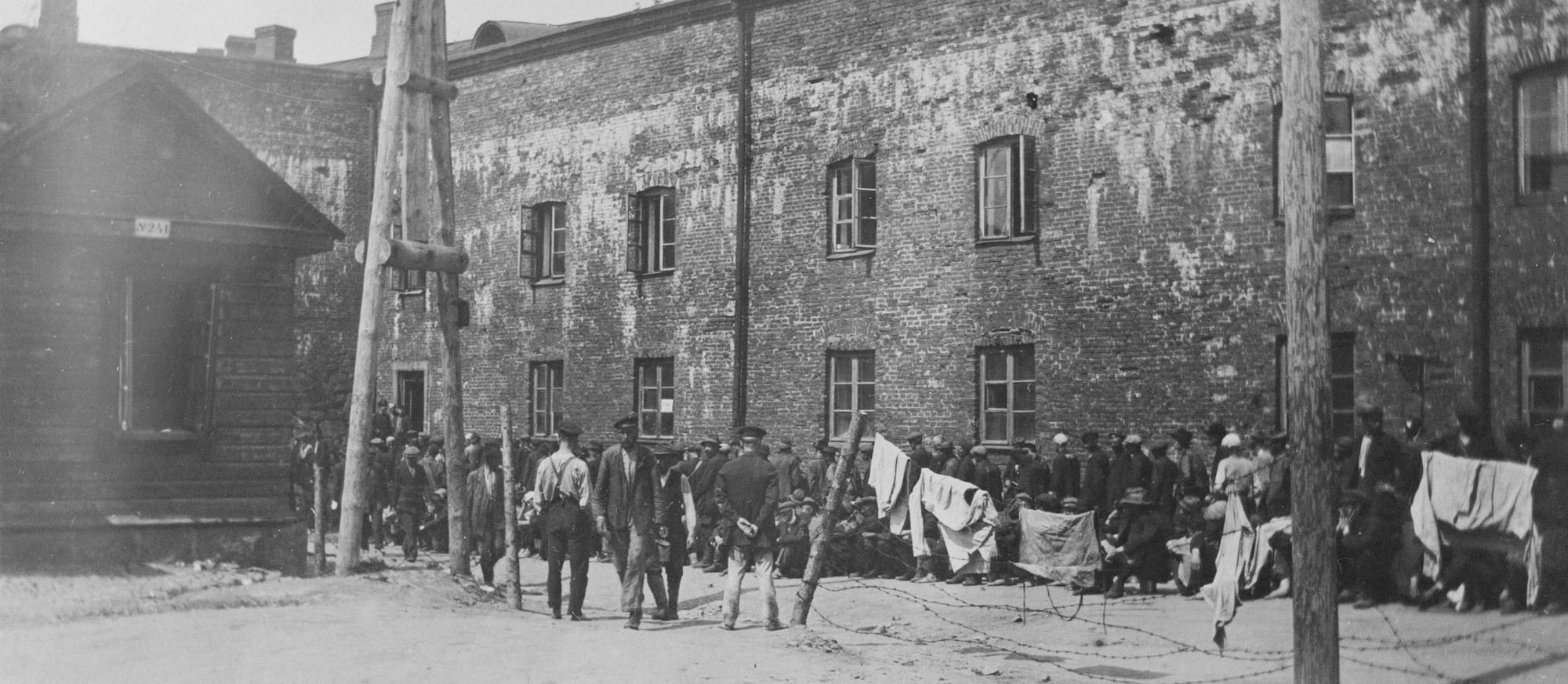
In World War II, the Nazis convinced the Jews to board the boxcars headed for death camps by telling them the Russians were closing in and they must leave for their own safety. Urgency was part of the lies.
The Fox's Den
The second part of the Chicken Little story is that the panicked farm animals meet a fox who knows the sky isn’t falling. He hurries them all into his den for their safety and protection.
And then eats lunch.